March 18, 2026
For this feature we met with Lucy De Keizer, a volunteer Mental Health Professional and Iguality Ambassador. While originally from Ethiopia, she has called many places home before settling in Barcelona.

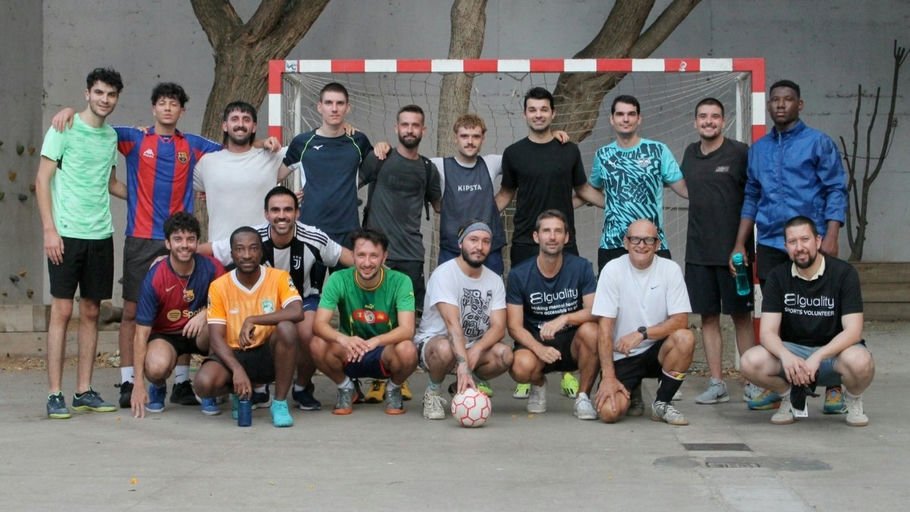
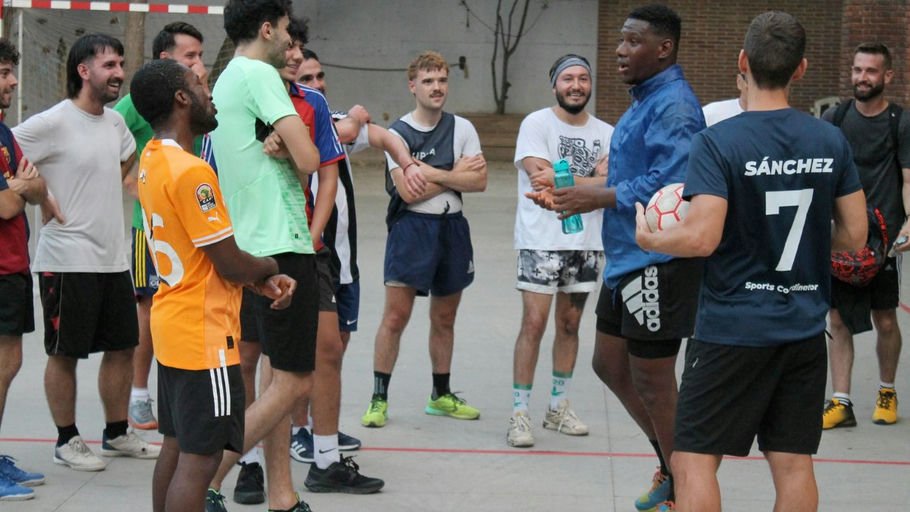
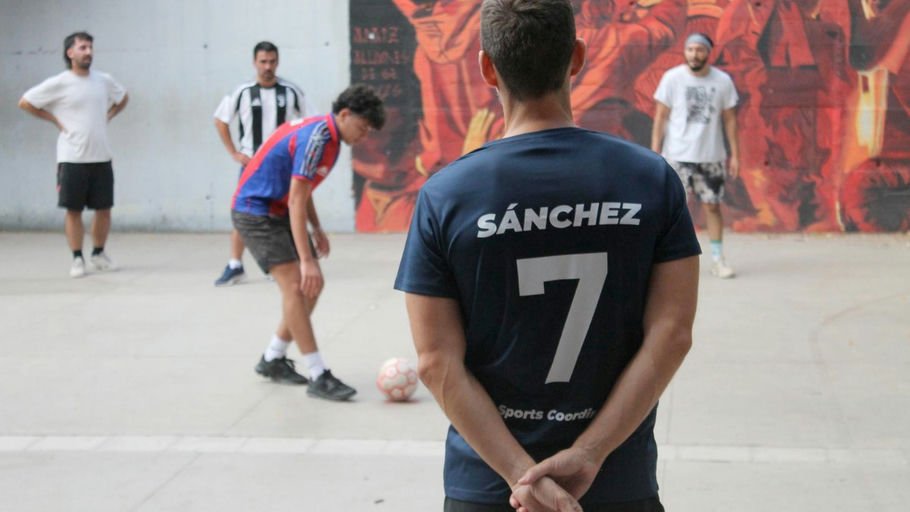
As a sports volunteer at Iguality, I’m mostly involved in coordinating the football sessions. A few years ago, I was actually the only sports volunteer, so I was also organising sessions for running groups and other activities.
We started mainly with migrant participants, and football turned out to be perfect as many people love the sport, and you don’t need to speak the same language to play. Even if somebody didn’t speak English or Spanish, they could still join through football. Some participants had just arrived in Barcelona, and football helped them integrate quickly and naturally. It’s a great tool for connection.
I actually joined Iguality before it became an official NGO. I used to work with Vincent Simon van Grondelle–now one of the co-founders of Iguality–at the NGO Open Cultural Center. Open Cultural Center focuses on the inclusion of refugees and migrants through educational and cultural activities, and Migracode teaches software skills as part of that work.
Vincent was the coordinator, and I was the technical manager. At that time, we two were basically the only staff members — 98% of the team were volunteers. That’s often how an NGO works: a small core team supported by many volunteers. I started as a volunteer myself before being hired to work part-time.
Two weeks after I started at Migracode, the lockdown for COVID began. We had to move everything online which, though complicated, worked surprisingly well. Students had to commit around 30 hours of study a week, almost like university. However, we began to notice that many were struggling. Not because of the content, but because the conditions of lockdown made it impossible to focus. Most of the students were living in shared flats, isolated and without social support.
We realised the issue with engagement was not the course, but rather the emotional pressure and loneliness participants were experiencing. It was then that Vincent had the idea to involve the support of volunteer psychologists. Even after I left the organisation, I still wanted to continue supporting people socially. That’s when I began organising football sessions and outdoor sports activities, to help people meet, connect, and feel better.
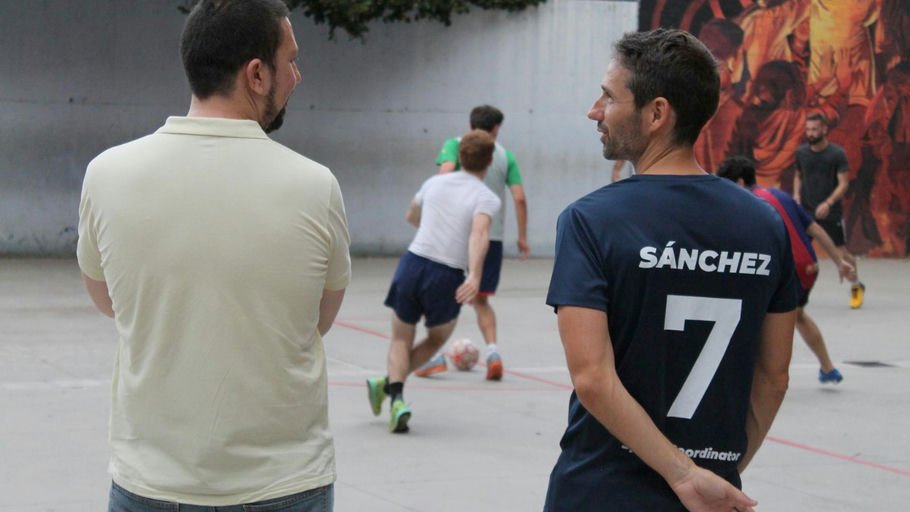
What makes me happiest is to see people at the sessions smiling and enjoying themselves. Many participants carry heavy challenges such as residency applications, financial struggles, and loneliness. But during sport, their minds can focus just on the game—for one hour, everyone is equal.
Football also forces you to communicate—maybe just a few words, but enough to socialise and connect. Some people meet after the sessions for a coffee or a beer, while others stay in touch through shared interests. Over the years, I’ve seen friendships develop and grow.
One participant from Africa stated that although he had lived in Barcelona for several years, joining the football group enabled him to establish his first group of friends.
For many, it’s extremely difficult to make friends. Cultural norms differ, and language barriers can be a huge challenge. I remember one participant from Mali who only spoke the language of his village — not French, not English, not Spanish. He also couldn’t write. His language wasn’t even available on Google Translate.
Even when he met another man from Mali who spoke the same language of his village, he didn’t have the confidence to approach him. Sometimes, people need encouragement just to take that step.
Iguality’s mission is about making everyone equal. In sport, you can see it clearly: it’s an opportunity for people of all ages, backgrounds, and languages to come together. In these moments, we are all the same..
Yes — it’s actually related to the migrant from Mali I mentioned earlier. He arrived in Europe by boat through the Canary Islands. He knew nothing about the language, the job market, or of everyday life here.Through different NGOs, including Iguality, he joined football sessions, started Spanish lessons, and began slowly building connections.
I discovered he had worked in agriculture in his home country, so when the company I was working at the time was looking to hire people to support in the installation of solar panels–a physical job to help carry materials onsite I helped connect him with them and, after two interviews, he got the job— his first job in Spain ever.
At first, he didn’t know how to navigate Spanish schedules, transport, or punctuality norms, but he adapted quickly. I imagine this process must be like moving to another planet — it’s extremely demanding as everything is new. Seeing that transformation was incredibly powerful.
I hope that everyone who comes to our sports events feels good, finds community, and starts to love the city and the country. I want them to feel less alone and that they are part of something.
Volunteering at Iguality will give you the chance to help people who may not be in a favourable situation. With your support, you can help make others feel better — maybe even happy. And that’s something truly meaningful.
This article was revised and finalised by Marianne McDade.
Stay up to date on our work, our awareness raising and advocacy efforts, our latest publications and of course, all our (sports) events by giving us a follow on social media or subscribing to our newsletter.
Stay up to date on our work, our awareness raising and advocacy efforts, our latest publications and of course, all our (sports) events by giving us a follow on social media or subscribing to our newsletter.
March 18, 2026
February 3, 2026
January 20, 2026
January 8, 2026

November 25, 2025

November 13, 2025