22 avril 2026

Iguality Voices is a series that highlights personal mental health stories from the Iguality community—volunteers, ambassadors, and those who’ve been impacted by our work. Each story offers a glimpse into someone’s life: their experiences, their challenges, and what being part of Iguality means to them. By sharing a piece of their journey, contributors help break stigma and foster understanding. Together, these stories build a larger picture of what it means to care—for ourselves, for each other, and for a future where peace of mind is possible for all.
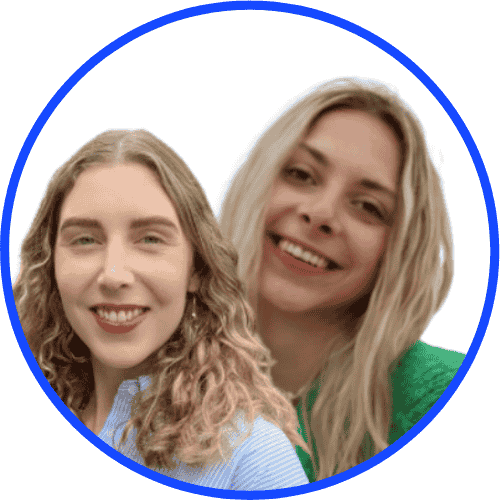
For this feature we meet with Enoé Parada, one of Iguality’s valued mental health professionals, who volunteers her services to community members and migrants, like herself. She is deeply motivated by her interest in understanding people, supporting them through their difficult moments, and her desire to give back to her community.
Enoé, tell us a bit about yourself and your role at Iguality.
I’m a clinical psychologist from Venezuela, and have been living in Spain for eight years. I work primarily with adults, as I have a bit more reservation when it comes to working with children. Besides my clinical work, I also teach at university, and I truly enjoy it. It’s one of my passions.
Outside of work, my hobbies include dancing and spending time in nature. I’m also an animal lover. I’m genuinely obsessed with my cat, for example.
What role does mental health play in your life?
I never originally planned to enter the mental health field. I was always interested in health in a more general sense and I imagined I might become a veterinarian or a doctor. However, when it was time for me to enter university, things in Venezuela deteriorated significantly. The quality of public universities had declined so much that the only option was to choose a private institution. Psychology was one of the programs available, and I decided to give it a try.
In the end, I really enjoyed it. Especially because it aligned with a deeply ingrained value of mine to help others and give something back to my community. That’s how I earned my degree in psychology.
Over time, I became particularly interested in the psychodynamic path (author’s note: Psychodynamic psychotherapy is a form of talk therapy that focuses on understanding the deeper, often unconscious forces that influence a person’s thoughts, feelings, and behaviors. It is based on the idea that past experiences, especially early relationships, shape how we relate to ourselves and others in the present.). What particularly interests me is its depth and the way it explains the unconscious connections within oneself. I’m an extremely curious person, and the idea of exploring the depths of people’s minds fascinates me.
This exploration is not to judge anyone, but to truly understand my clients. I like to know why they are the way they are, why they act the way they do, and to help them understand themselves. Not to “fix” them—because I don’t see myself as a professional who fixes people—but to support them in knowing themselves better. Knowledge is power and with greater self-understanding, they can make better decisions.
What would you like people to understand about mental health?
I’ve been noticing that we have a collective problem with suffering right now. As clinicians, I believe it is not our job to end suffering, but to help people develop coping strategies to deal with it better.
We don’t tell people ‘everything is ok’, rather we acknowledge and validate what they are going through. We might say: ‘You are right. Things are bad right now. What you have been through is awful. Now, what can we do about it?’
So, suffering is a part of life, but it can often lead to growth. Negative emotions, even though they feel uncomfortable, are not inherently bad. They are a natural part of life and serve an important function. As a community, we need to create spaces where people can genuinely work through these emotions, because they are social as much as they are individual. We need communities that can embrace anxiety, discomfort, unemployment, uncertainty, and more. We have to build resources that help people face these challenges, not deny them.

What inspired you to join Iguality?
During my studies at ISEP (Instituto Superior de Estudios Psicológicos), one of my professors and thesis supervisor, was Alex Duran, one of the founders of the clinical branch of Iguality. Through him, I conducted a case study with one of Iguality’s first clinical patients. I found the work deeply resonated with my desire to give back to society and have stayed connected since then, contributing now as one of Iguality’s volunteer therapists.
As a migrant myself, I can relate to many of the challenges Iguality’s clients experience. I appreciate being able to use my personal experience to provide quality, empathetic care, and give back to the community.
Moreover, on the one hand, it’s incredibly enriching to work with a wide variety of patients. On the other hand, working alongside psychotherapists who also come from diverse cultural contexts is a crucial part of my learning. Everyone brings different perspectives, and this mutual exchange helps us learn from one another while ensuring the highest quality care for our clients with a wide range of cultural and identity backgrounds at Iguality.
What is it about Iguality’s mission that you find important to you personally?
Mental health is not an individual problem, but a social one.
In Spain, the mental health support for vulnerable community members dealing with serious distress is not sufficiently accessible. Iguality helps to fill that gap.
Iguality adopts a unique biopsychosocial approach. It considers not only the individual, but also the social context, migration-related grief, and the need for community belonging.
What part of your work with Iguality is especially meaningful to you?
My most meaningful moments are always connected to clients. When you see their progress, or when they tell you that your support helped make a difference. Those moments show me how much this work matters.
What does community mean to you?
Community is where you feel safe to be yourself. Humans are social beings—we cannot grow alone. Community is the network that supports us, holds us, and helps us thrive.
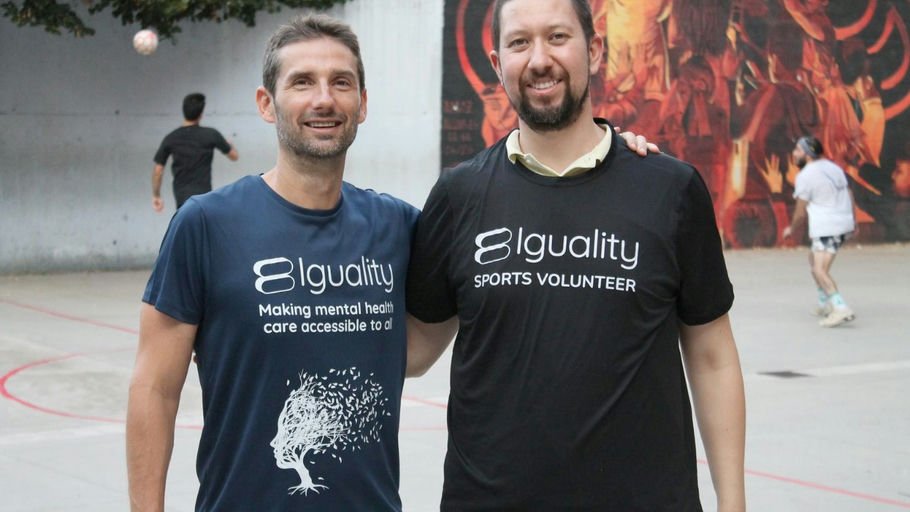
Iguality creates this through therapy, but also through sporting activities, which help people connect outside clinical settings. These kinds of activities help us build a network that makes us feel safer and more motivated to take action in other parts of our lives too, like reaching out to find a job or even smaller things like not throwing garbage on the street. It’s a small step that can make us feel a little bit better. And by feeling a little bit better, we have more capacity to become a little bit better as people, step by step.
What would you say to someone considering to volunteer?
Be curious. Ask questions without judgment and try to truly understand the other person. Curiosity creates connection, and connection is what helps people heal.
Also, take care of yourself. Rest, move, eat well, dance, spend time in nature. You can’t help others if you’re depleted.
What would you say to someone struggling with their mental health right now?
You are not alone, and there is nothing wrong with you.
The mind can be a little tricky, and since we actually live in it, we need to work on it. Just because a place is messy, or a little chaotic, doesn’t mean you can’t live there. You peut move things around, and you don’t have to do it alone, of course. That’s why, when you need help building a house, you ask an architect, or someone else, to help design it. In the same way, that’s why you can approach a therapist to help design your own mind.
Things will get better, but not just because they’re supposed to. Life is like water flowing under a bridge: you may be the same bridge, but the water is never the same. With enough time and enough understanding of yourself, things will start to fall into place. So give yourself time, give yourself confidence. And as I said before, there’s nothing wrong with you. Many people struggle with mental health, and many people need help; so it’s okay to ask for it. Even therapists do.
Are there any last-minute thoughts you would like to share?
Being a psychologist is a beautiful vocation because you’re trying to understand the mind while being a mind, and that is truly fascinating.
Also, don’t be afraid to make mistakes. Learn. Grow. Rest. And don’t forget to take care of yourself!


Restez au courant de notre travail, de nos efforts de sensibilisation et de plaidoyer, de nos dernières publications et bien sûr de tous nos événements (sportifs) en nous suivant sur les réseaux sociaux ou en vous abonnant à notre newsletter.

22 avril 2026

4 avril 2026

3 avril 2026

18 mars 2026

3 février 2026

20 janvier 2026