Iguality Voices: Лючіана Вачок'є про подолання стигми щодо психічного здоров'я та розбудову спільноти

Published on May 14, 2026
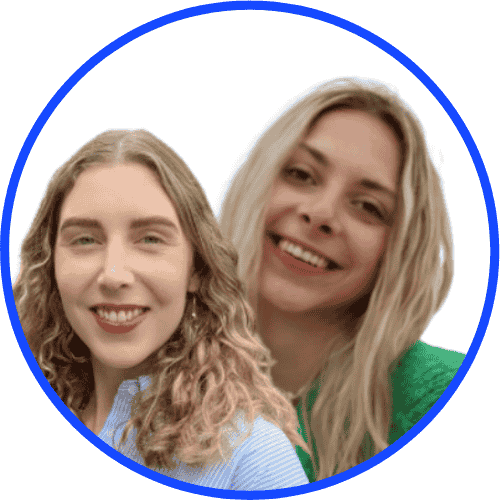
Iguality Voices launched as a platform for personal mental health stories from our community: volunteers, ambassadors, and those touched by our mission. In this first feature, co-founder and Mental Health Coordinator Luciana Wachockier shares her journey from Brazilian psychologist to building accessible care for migrants in Barcelona.

Автори Антонія та Наара

Luciana, as a co-founder of Iguality, could you tell us a bit about yourself and your work with the organization?

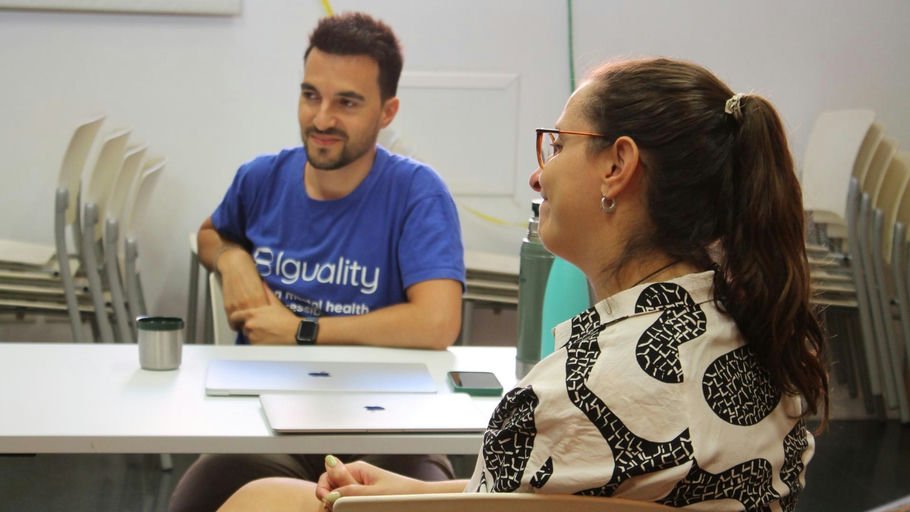
I’m originally from Brazil—I moved to Spain eight years ago—and am currently the Mental Health and Psychosocial Support Coordinator. In this role I manage clinical cases, assigning them to different therapists within our organization, and review all incoming requests. I also interview and onboard new volunteers. In this dual role, I serve as a point of contact for our therapist volunteers and therapy beneficiaries. I check in on volunteers and ask them how they’re doing, and clarify any questions they may have—whether regarding specific cases or general procedures. I’m also active in conducting art therapy group sessions. Another part of my role includes designing and facilitating learning and development events for Iguality volunteers, such as open exchanges or workshops, alongside managing partnerships with current and prospective NGO partners. 

What role is mental health playing in your life?

I am convinced that mental health affects almost every aspect of our lives. Physical, professional, social, and much more. I have always been interested in mental well-being and understanding people. This is what led me to pursue a career in psychology. In today's world, my desire to work in the mental health field has only grown stronger. Being active in this sector, and giving back to others and the community as a whole, feels deeply rewarding to me. 

Is there something that you wish more people knew about mental health?

I wish more people were aware that mental health doesn't have to be such a taboo topic. Depending on their cultural background, people who come to Iguality might have different ideas about barriers and taboos regarding mental health. While some people may feel comfortable speaking about this topic, others might feel more stigmatized. Here at Iguality, we work to break this taboo. I want people to know that they aren't "crazy" for seeking help, and that it's okay to accept support. Reaching out for help doesn't have to be such a big deal. On the contrary, it has the potential to positively influence our lives. 

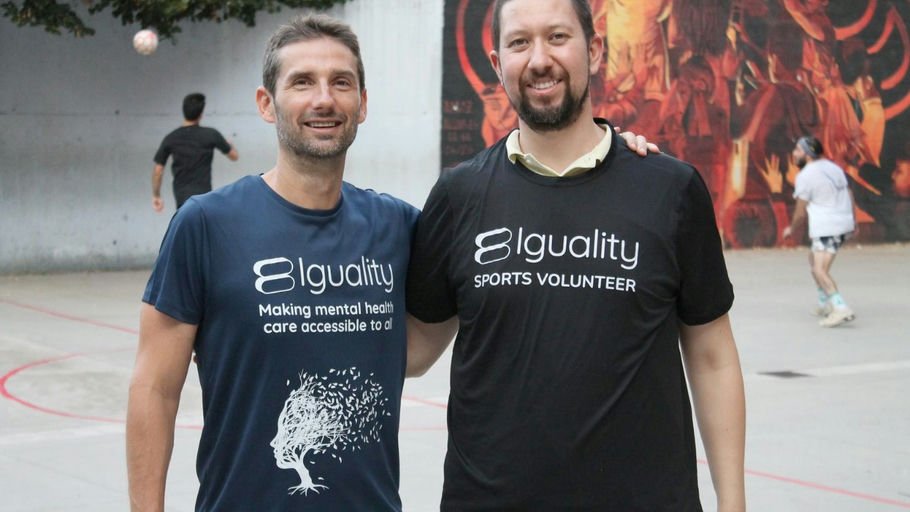
Iguality embodies this potential in various ways, not only through mental health support but also through community events. Individual psychotherapy might not be for everyone, which is why we offer different kinds of support in a holistic approach. We offer group therapy and social events of various kinds, such as sports events. These spaces offer the opportunity to become more comfortable with the concept of mental health and create safe spaces to communicate about it. For some, it may even open the door to saying: "Yes, I'm struggling right now, and I'm seeking help for it—and there's no shame in that."

We can see that mental health has played a big role in your life. What inspired you to eventually found this organisation?

Well, I moved to Spain as an immigrant myself. As a Brazilian psychologist, my professional options were limited, so I started working at a corporate firm, which was never my dream. Then the Covid-19 pandemic hit, and I suddenly had a lot of time on my hands—ready to be shaped into a new project. I started thinking about possible engagements and eventually reached out to Vincent Simon van Grondelle, another Iguality co-founder. We were motivated by the huge treatment gap we noticed in Spanish society, especially in Catalonia, with a focus on Barcelona. We realized that waiting times were enormous and that there were few specialists in the mental health field who were proficient in the languages required to provide support to migrants. This sparked our desire to create a space that provides quality care for people at risk of social exclusion—free of charge.

Tell us more about how the partnership with Vincent developed.

I met Vincent while working at my former corporate job, which was related to social impact. At the time, he was working at an NGO called MigraCode, which was a partner of my company. I eventually reached out to him, saying, "Hey, I have time. I want to do something." 

I told him about my HR expertise but stressed that I am a psychologist and would like to work in the mental health field. At MigraCode, Vincent worked with students from a wide range of cultural backgrounds. During the pandemic, it became apparent that they were facing unique challenges related to their migration status, compounding the already burdensome period of the pandemic. This is how we came up with the idea to especially assist individuals from cultural minority groups who were facing a number of very specific challenges and help them navigate this phase of arrival and starting over. First, we started a mental health program within MigraCode, eventually expanding it into its own NGO, now known as Iguality.

Is there a moment in your work with Iguality that was especially meaningful to you?

I can’t pinpoint one specific moment, but I'm always touched by feedback from people and by the clear, long-term impact of our work. Sometimes I receive this feedback through surveys we conduct, and sometimes I collect it personally. This might be in meetings with former patients or by observing how former clients have continued their involvement with Iguality as volunteers, still to this day. 

It is especially meaningful to me when I meet former patients after some time has passed. I get to see how well they are doing now compared to when they first arrived at Iguality, often facing several challenges and struggles. Similarly, when I see how former clients continue to be involved in the Iguality community—as sports volunteers, ambassadors, or by posting about us on social media every once in a while—I feel a strong sense of meaning and purpose.

You frequently mention the term “community”. What does this mean to you, and how does Iguality contribute to a sense of it?

For me, community means identifying with others. Not only regarding the place you're from or the situation you're in, but also the causes you contribute to. It's about sharing the same interests and purpose and wanting to create something better. For me this is a higher well-being and better mental health. This is what community means for me. More broadly, Iguality brings a sense of stability through helping to provide a support system—another important part of a community.

What impact do you hope to create through your work?

I hope to improve people's lives by creating stability, well-being, and more equal opportunities. Mental health influences the extent to which we are able to reach out for different possibilities, and sometimes people are deprived of that privilege. With Iguality, we aim to ensure that people have the chance to pursue life’s opportunities on a more equal footing.

If somebody wanted to join Iguality as a volunteer, what message would you have for them?

At Iguality, we're driven to work with individuals who are eager to not only gain experience but also be a part of something greater — a community and social impact that we're dedicated to. I also want them to know that support at Iguality is a two-way street: you support us, of course, but you’re also part of this community, and we support you.

What would you say to someone going through a hard time with their mental health right now?

It's normal to struggle! Everyone struggles at some point in their life, and it doesn't have to be the end of the world. It’s okay to need help, and it's okay to ask for it. There’s no shame in that. Sometimes, relying on others is not only necessary, but also a good thing.

Is there anything else you would like to share?

I believe it's important to emphasize that we need to destigmatize conversations about mental health. We're making progress, but we need to talk about it more to further normalize it. This includes fighting for equal access to mental healthcare for all.

Ця стаття була переглянута і доопрацьована Маріанною МакДейд.

Більше про авторку: Антонія та Наара

Наара та Антонія - психологи-інтерни в Iguality та співавтори, які займаються питаннями інклюзивного психічного здоров'я та соціальної справедливості. Разом вони займаються підтримкою, дослідженнями та адвокацією вразливих груп населення на рівні громад, використовуючи свій міжкультурний досвід у мультикультурній команді.

Про автора

Антонія та Наара

Наара та Антонія - психологи-інтерни в Iguality та співавтори, які займаються питаннями інклюзивного психічного здоров'я та соціальної справедливості. Разом вони займаються підтримкою, дослідженнями та адвокацією вразливих груп населення на рівні громад, використовуючи свій міжкультурний досвід у мультикультурній команді.

Слідкуйте та підписуйтесь

Будьте в курсі нашої роботи, ініціатив з популяризації ментального здоров'я, наших останніх публікацій і, звичайно, усіх наших (спортивних) подій, підписавшись на нас у соціальних мережах або на нашу розсилку.

Будьте в курсі подій

Слідкуйте та підписуйтесь

Будьте в курсі нашої роботи, ініціатив з популяризації ментального здоров'я, наших останніх публікацій і, звичайно, усіх наших (спортивних) подій, підписавшись на нас у соціальних мережах або на нашу розсилку.

Читайте та дізнавайтеся більше...

Питання та відповіді з Еное Парада про красу роботи психолога та біопсихосоціальний підхід на Iguality

Питання та відповіді з Еное Парада про красу роботи психолога та біопсихосоціальний підхід на Iguality

By Антонія та Наара

24 квітня 2026 року

Iguality Voices ділиться реальними історіями психічного здоров'я з нашої спільноти, щоб подолати стигму та сприяти порозумінню. У цьому випуску ми зустрічаємось з Еноє Парада, відданою професіоналкою у сфері психічного здоров'я, яка добровільно ...
Відкрито реєстрацію на Vuelta de Iguality ’26: Безкоштовний благодійний забіг та велопробіг

Відкрито реєстрацію на Vuelta de Iguality ’26: Безкоштовний благодійний забіг та велопробіг

By Вінсент Саймон ван Гронделл

22 квітня 2026 року

Відкрито реєстрацію на Vuelta de Iguality '26, яка пропонує безкоштовну участь для бігунів та велосипедистів усіх рівнів, підтримуючи при цьому охорону психічного здоров'я в Каталонії. З новим доступним місцем поблизу ...
Можливість стажування/практики за програмою Erasmus+ для студентів магістратури з психології

Можливість стажування/практики за програмою Erasmus+ для студентів магістратури з психології

By Вінсент Саймон ван Гронделл

4 квітня 2026 року

Iguality пропонує практичне клінічне стажування для студентів-психологів та нещодавніх випускників, яке розпочнеться у вересні 2026 року в Барселоні. Якщо ви шукаєте реальний досвід консультування зі змістовною супервізією ...
Координатор волонтерського футболу Карлос про спільноту, зв'язки та силу спорту

Координатор волонтерського футболу Карлос про спільноту, зв'язки та силу спорту

By Антонія та Наара

3 квітня 2026 року

Iguality Voices ділиться реальними історіями психічного здоров'я з нашої спільноти, щоб подолати стигму та сприяти розумінню. У цьому випуску ми зустрічаємося з Карлосом Санчесом, нашим футбольним координатором-волонтером, чия пристрасть до спорту ...
Подорож Люсі: Від Ефіопії до Барселони та пошук мети через адвокацію психічного здоров'я

Подорож Люсі: Від Ефіопії до Барселони та пошук мети через адвокацію психічного здоров'я

By Антонія та Наара

18 березня 2026 року

Для цієї статті ми зустрілися з Люсі де Кейзер, волонтеркою, фахівцем з психічного здоров'я та амбасадоркою Iguality. Вона родом з Ефіопії, але перед тим, як оселитися в Барселоні, побувала в багатьох місцях, де називала себе домом.
Ризики для психічного здоров'я мігрантів та біженців

Ризики для психічного здоров'я мігрантів та біженців

By Антонія Гонсельманн

3 лютого 2026 року

У контексті глобального зростання міграції та вимушеного переміщення психічне здоров'я мігрантів і біженців стало критично важливим питанням громадського здоров'я та соціальної сфери. Дослідження постійно показують, що ці ...
Публікацій не знайдено.