8 de enero de 2026

In Episode 2 of the Lifeswap YouTube series, we see how subtle intercultural differences can sometimes lead to misunderstandings. Jörg, a German living in New Zealand, calls his friend Duncan, who is from New Zealand, to ask for advice about a conflict in his shared flat. After Jörg directly told his flatmate that the tea towel “was stinking” and needed to be replaced, his flatmate felt hurt and offended. From Jörg’s perspective, he was simply describing the situation factually and offering a practical solution.
Duncan explains that many Kiwis (people from New Zealand) tend to avoid such direct confrontation and prefer a more indirect, considerate communication style. He helps Jörg understand how to express his needs in a way that softens criticism and preserves harmony in relationships.
What we see in this example is a difference in what cultural psychology calls communication styles (Guo, 2020). Whether people communicate in a more information-based, linear way like Jörg, or with a stronger focus on interpersonal relationships and a more indirect style like Duncan, can be strongly influenced by the cultural background they come from. Communication styles are just one example of intercultural differences that shape our everyday interactions when people from different cultures come together.
But let’s start from the beginning.
Culture is an omnipresent phenomenon that can influence how we think and behave as individuals. One often-cited definition describes culture as “a fuzzy set of basic assumptions and values, orientations to life, beliefs, policies, procedures and behavioral conventions that are shared by a group of people, and that influence (but do not determine) each member’s behaviour and his/her interpretations of the ‘meaning’ of other people’s behavior” (Spencer-Oatey, 2008, p. 3).
In other words, we are all influenced by the culture we live in, even if it is difficult to clearly identify what exactly characterizes our own culture. As Kluckhohn famously put it, “It would hardly be fish who discovered the existence of water” (as cited in Wolcott, 1975).
In the case of Jörg and Duncan, we could say that they are like “two fish from two different fish bowls.” To interact successfully and positively across cultures, Jörg expands his _intercultural competence _with Duncan’s support. But is intercultural competence only relevant in international or interethnic encounters, as in Jörg’s and Duncan’s relationship?
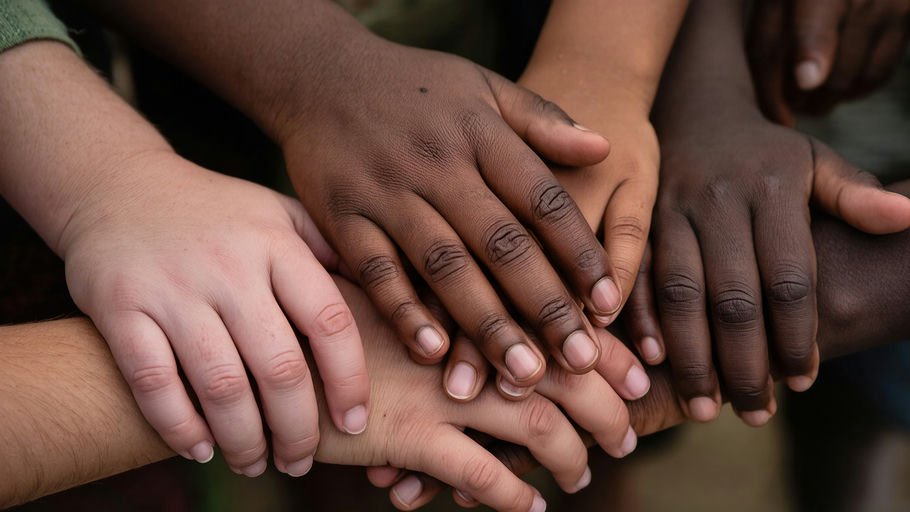
Originally, intercultural competence was thought to be related mainly to interethnic interactions (Sue et al., 1992). However, more recent research shows that encounters between individuals differing in disability status, social class, religion, age, and sexual or gender identity also require a form of intercultural competence (Arredondo et al., 1996; Israel & Selvidge, 2003; Lago, 2016; Moodley & Lubin, 2008). All of these factors shape social groups whose members share certain values, beliefs, behavioral conventions, and ways of making meaning.
Several societal developments, such as migration and displacement processes, as well as the growing visibility of lesbian, gay, bisexual, transgender, and queer (LGBTQ) communities, have led to an increased diversification of clients in mental healthcare, with migrant, refugee and LGBTQ individuals facing higher vulnerabilities for mental health struggles (link Toni’s and Taisa’s blog posts here). This development has created challenges both at the systemic and the individual level.
On the systemic level, national mental-healthcare systems are often not sufficiently equipped to respond effectively to this evolving client diversity. Research shows that migrant and refugee populations face higher barriers to accessing and regularly attending psychotherapy services (Derr, 2016; Lehti et al., 2025; Von Lersner et al., 2019). In addition, mental-healthcare services have been shown to be less effective and of lower quality for migrant, refugee, and sexual and gender minority clients (Beard et al., 2017; Butt et al., 2015). Among the reasons for this are gaps in psychological research that disadvantage social groups from non-WEIRD (Western, Educated, Industrialized, Rich, Democratic) contexts (Wong & Cowden, 2022), as well as the underrepresentation of psychotherapists from minority backgrounds within standard mental-health systems (Solomonov et al., 2025).
On the individual level, psychotherapists themselves encounter new challenges when working with culturally diverse clients (Mak & Shaw, 2015). Many report feelings of uncertainty or even overwhelm in these therapeutic encounters. For example, Kanakam (2022) found that therapists often experience anxiety about saying or doing something inappropriate when engaging with clients from minority cultural backgrounds, and many expressed a need for more time and space to reflect on cultural issues within the therapeutic process. Such feelings of insecurity may lead therapists to avoid initiating conversations about culture and ethnicity (Chang & Berg, 2009), even though addressing these themes is essential for exploring experiences such as racial profiling or anti-transgender attitudes in psychotherapy (Day-Vines et al., 2018).
On an individual level, Sue and colleagues (1992) proposed that cultural competence in mental-health counselors consists of three dimensions: (1) beliefs and attitudes, (2) knowledge, and (3) skills.
This means that (1) psychotherapists should be aware of how their own culture has influenced their beliefs and attitudes, and respect cultural differences between themselves and their clients; (2) they should possess knowledge about their own cultural background, about processes such as discrimination and racism, and about how their communication style may differ from that of their clients; and (3) they should develop practical skills to effectively treat clients from minority cultural groups, for example by implementing intervention approaches that are particularly meaningful for a specific population.
Intercultural competence has also been conceptualized on a systemic level (Kirmayer et al., 2012). Here, intercultural competence is understood as a capacity of healthcare institutions, in which organizational values, staff development, and institutional structures support care that is effective and beneficial for diverse cultural groups.

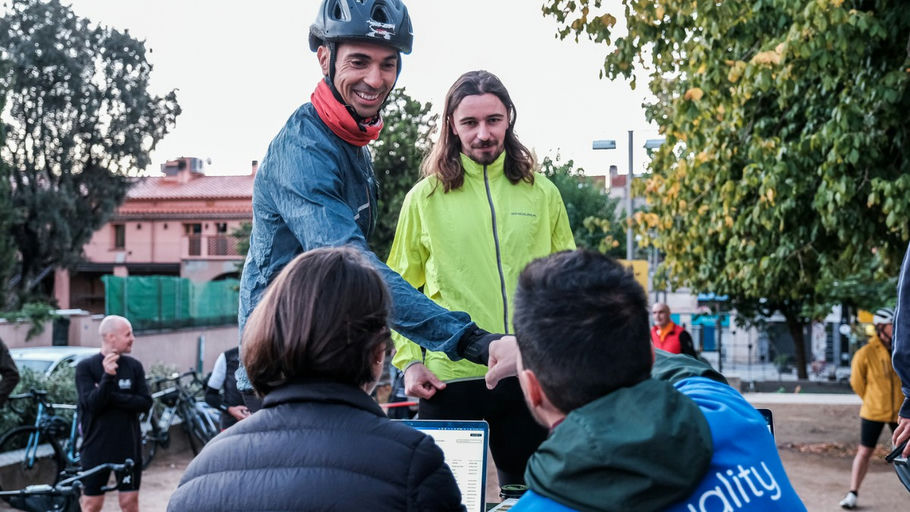
As an institution, Iguality demonstrates intercultural competence by providing well-being activities not only in individual, but also in community settings, in order to respond to the variety of needs of culturally diverse clients. Moreover, Iguality specifically implements many measures and methodologies to foster real inclusion and deep-level diversity. In practice, community members can be involved in the needs assessment, as well as in the design and execution of activities, particularly in the sports and social-belonging areas. In this way, the community itself helps shape what is needed to improve collective well-being.
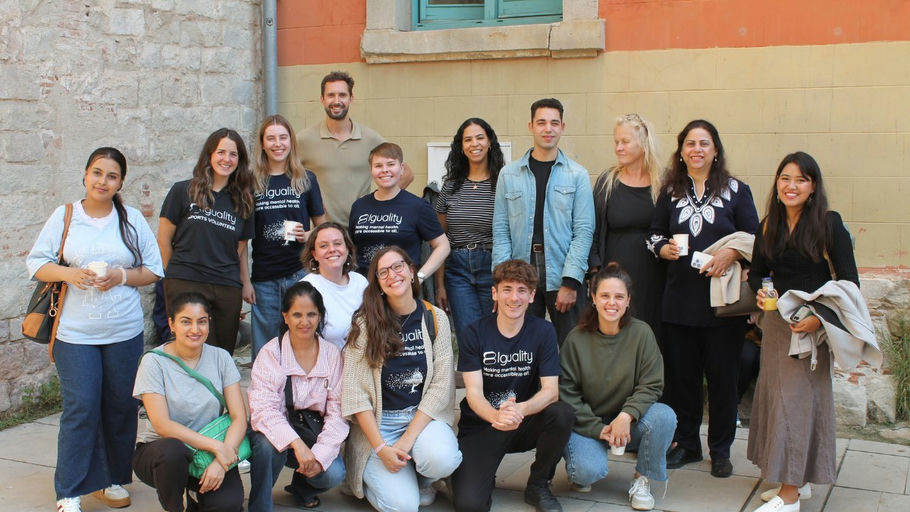
Furthermore, through the high level of diversity among its administrative staff and psychotherapy volunteers, Iguality’s team not only more accurately reflects the ethnic and cultural composition of its clients, but can also match psychotherapists and clients based on cultural and linguistic background. Lastly, Iguality offers intercultural psychotherapy interventions, supported by an expert in transcultural psychotherapy with extensive experience in this field. Adil Qureshi, who conducts multilingual supervision sessions for Iguality’s psychotherapy volunteers, holds a PhD in Counseling Psychology and has long-standing experience in teaching cross-cultural management as well as in supervision and training in the context of migration and mental health.
All of these organizational characteristics call for psychotherapists who are already open to intercultural perspectives, and at the same time further foster their competences in this area. Psychotherapists who join Iguality and resonate with its commitment to inclusion and equal access to mental health care bring respect for intercultural differences with them, fulfilling the (1) awareness and attitudes dimension of Sue and colleagues’ (1992) conception. Through their work with culturally diverse colleagues and clients, they continue to expand their (2) intercultural knowledge, for example regarding differing communication styles and lived experiences. Finally, intercultural supervision supports the development of (3) intercultural skills, equipping psychotherapy volunteers to work more effectively with migrant, refugee, LGBTQ+, and other minority group clients.
Intercultural competence is not a fixed skillset, but an ongoing practice of curiosity, humility, and relationship-building. Just as Jörg, in our example from the beginning, learned to see communication from a new perspective, therapists, and mental-health institutions, can learn to listen across difference in ways that preserve trust and effectiveness of care. When clients feel understood not only as individuals, but also as members of their cultural worlds, psychotherapy becomes a space where people of all cultural backgrounds feel more at ease. The more we commit to this work, the closer we come to a mental-health system in which everyone, regardless of background, feels seen, safe, and welcome.


Mantente actualizado sobre nuestro trabajo, nuestros esfuerzos de sensibilización y promoción, nuestras últimas publicaciones y, por supuesto, todos nuestros eventos siguiéndonos en las redes sociales o suscribiéndote a nuestro boletín.

8 de enero de 2026

25 de noviembre de 2025

13 de noviembre de 2025

18 de octubre de 2025

6 de octubre de 2025

19 de septiembre de 2025